Why Rockets Have Stages: The Math That Forces Multistage Design
A single-stage rocket cannot reach orbit. The Tsiolkovsky equation tells us why — and why every orbital rocket since 1957 has used at least two stages.
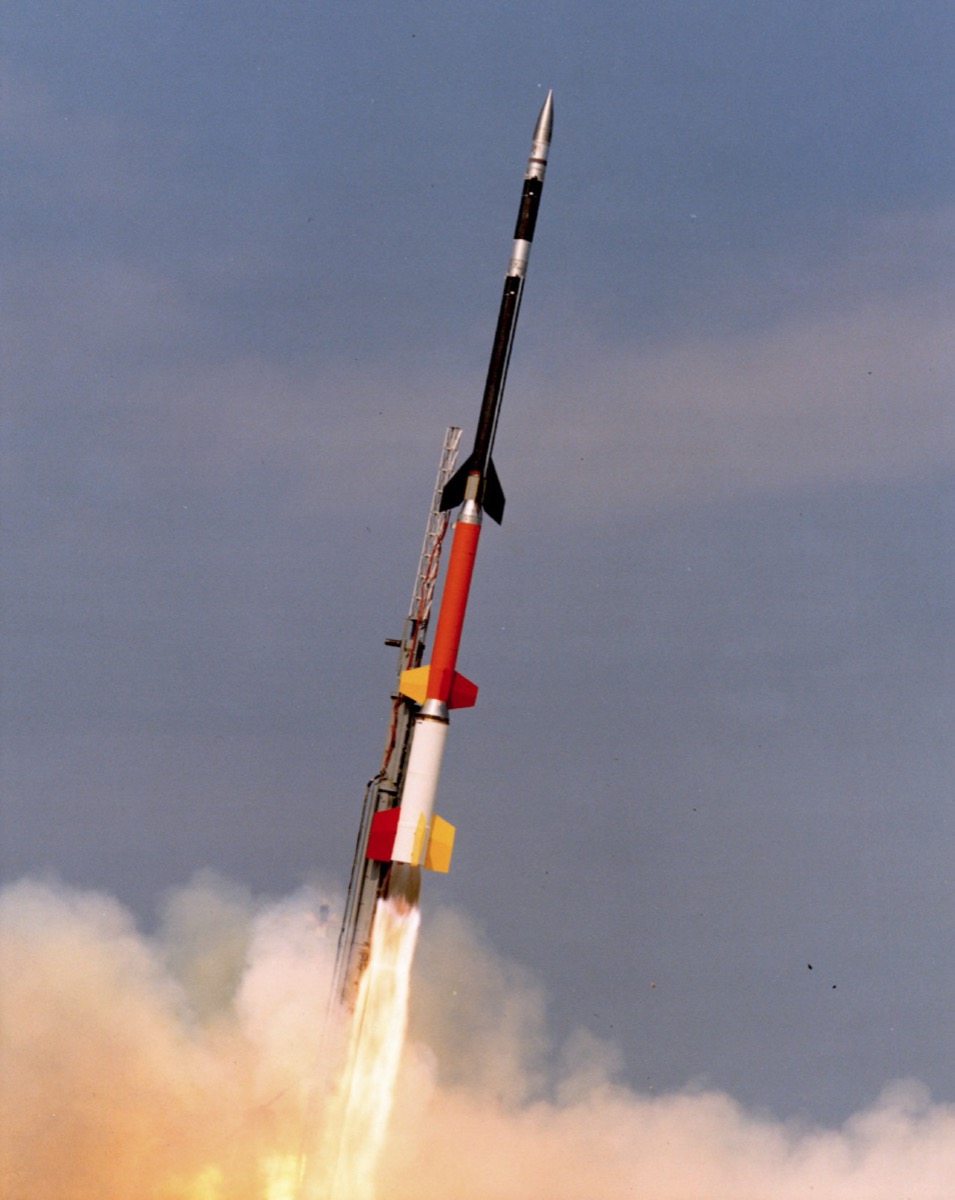
No single rocket has ever reached orbit. The reason is mathematical: the rocket equation tells us that to reach orbital velocity, you need either an impossibly high specific impulse, or you need to drop empty tank mass during the ascent. Multistage design is the elegant solution.
The Tsiolkovsky rocket equation
Δv = Isp × g × ln(m₀ / m_final). Translation: the velocity change you can achieve depends on your engine's efficiency (Isp) times the natural log of your mass ratio (full mass over empty mass). The natural log is the catch — to add 50% more delta-v, you need to roughly double your mass ratio.
Why a single stage cannot reach orbit
To reach orbital velocity (~9.4 km/s including gravity and drag losses), with the best available engines, you would need a mass ratio of roughly 12 or higher — meaning the rocket is more than 92% propellant by mass. No structural materials we have can hold that much fuel without weighing more than they support.
How staging fixes it
- Build the rocket as two or more independent stages, each with its own engines and tanks.
- Use the first stage to lift the entire vehicle out of the dense lower atmosphere.
- When the first stage runs out of propellant, jettison it — instantly improving the mass ratio of what remains.
- Continue burning the second stage with a much lighter empty mass.
- Repeat for additional stages until orbit.
- Single-stage to orbit
- Theoretically possible with extreme materials — never demonstrated
- Two-stage rockets
- Falcon 9, Falcon Heavy, New Glenn, Electron
- Three-stage rockets
- Saturn V, Soyuz, Long March 5
- Stage drop benefit
- Each separation reduces empty mass by ~80%
Why not infinite stages?
Each additional stage adds mechanical complexity, separation events, and engine duplications. The marginal return diminishes. Two stages is optimal for most low Earth orbit missions; three stages for high-energy missions like geostationary or interplanetary departure.
Boosters vs stages
Boosters are parallel-firing supplemental rockets that drop early. They function similarly to staging but operate alongside the main core rather than below it. Falcon Heavy uses two side boosters; Atlas V can use up to five solid boosters depending on configuration.
Frequently asked questions
Has anyone flown a single-stage-to-orbit rocket?
No. Several programs (NASA X-30, Lockheed VentureStar) reached the design stage but never flew. Single-stage to orbit remains theoretically possible but never achieved.
Does Starship have stages?
Yes — Starship has two stages: Super Heavy booster and Starship upper stage. Both are designed for full reuse.
Why did the Saturn V have three stages?
It needed enough delta-v to reach Earth orbit, then transfer to lunar orbit, then return — a much higher total delta-v than a typical orbital mission.
Get every launch in your pocket.
Real-time alerts, live ISS tracking, AR sky mode, and synchronized T-0 haptic across every device worldwide.
Download on the App Store