Rocket Engine Types Compared: Solid, Liquid, Hybrid, and Electric
Different engines for different jobs. Solids for boosters, liquids for big lifts, hybrids for safety, electrics for deep space — what each does and why.
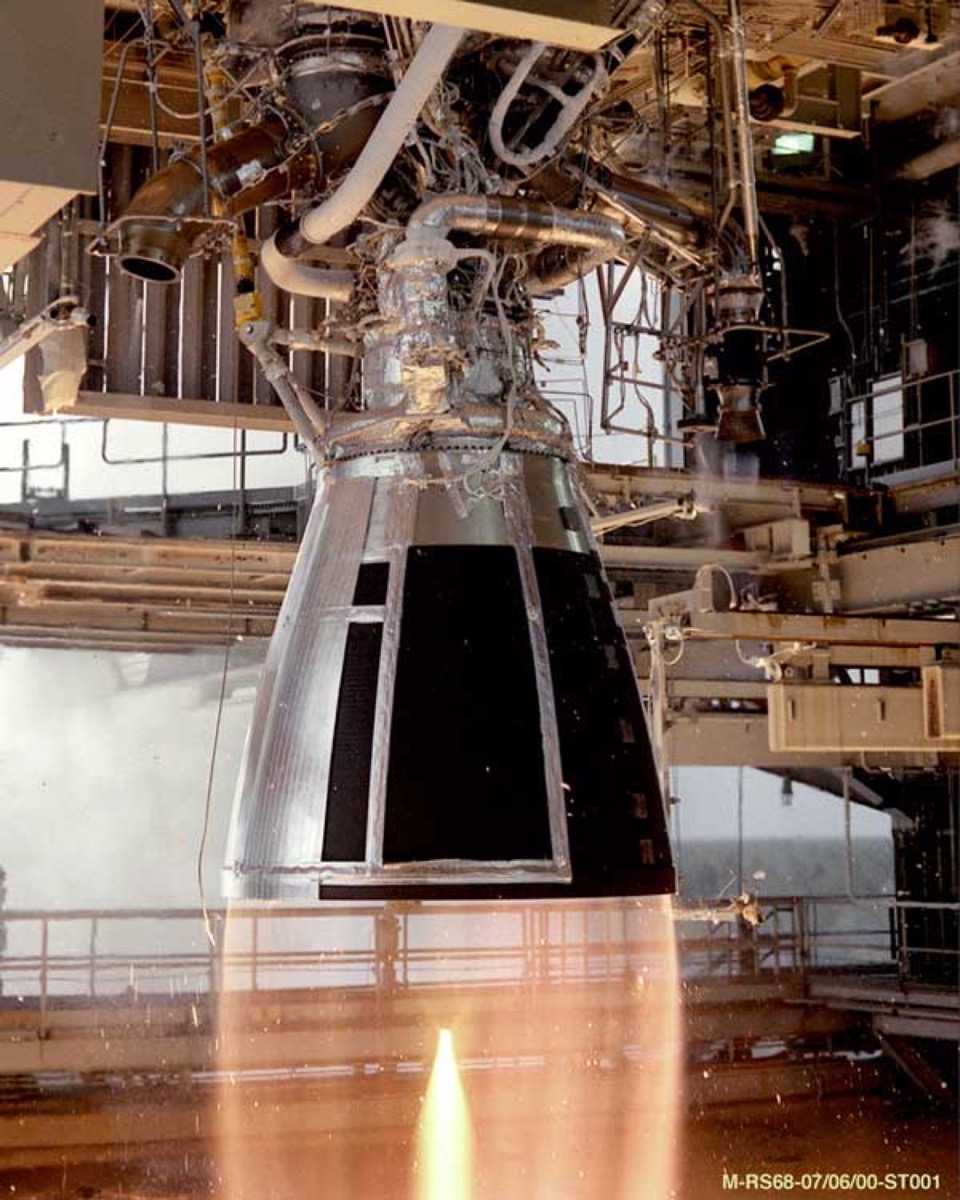
Rockets all do the same thing — accelerate gas backward to push forward — but the engineering takes very different forms depending on mission. Here are the four major engine types and the jobs they do best.
Solid rocket motors
A casing full of solid propellant, lit at the top and burning along its length. Simple, reliable, storable — the same boosters can sit on a launch pad for months. Cannot be throttled or shut off. Used for boosters (Space Shuttle, SLS, Ariane 5/6), military missiles, and amateur rocketry.
Liquid rocket engines
Two liquids — fuel and oxidizer — pumped into a combustion chamber where they burn. Throttleable, restartable, much higher specific impulse than solids. The dominant choice for orbital and beyond. Most modern liquid engines fall into three propellant families:
- Kerolox (kerosene + LOX) — Falcon 9 Merlin, Saturn V F-1, Soyuz RD-107. Dense, storable, robust.
- Methalox (methane + LOX) — Starship Raptor, BE-4, Vulcan Centaur. Cleaner, lower coking, ideal for reuse and Mars in-situ propellant production.
- Hydrolox (LH2 + LOX) — Saturn V J-2, Space Shuttle Main Engine, SLS RS-25. Highest performance, but bulky and difficult to handle.
Hybrid rocket engines
A solid fuel grain with a liquid (or gas) oxidizer flowing through it. Less performance than pure liquids but throttleable and safer than pure solids. Virgin Galactic's SpaceShipTwo uses hybrid propulsion.
Electric propulsion (ion, Hall, plasma thrusters)
Use electricity (typically from solar panels) to accelerate ionized gas, often xenon. Tiny thrust — a few millinewtons — but extraordinarily efficient (specific impulse 1,500 to 5,000+ seconds). Used for satellite station-keeping, deep-space probes (Dawn, BepiColombo), and increasingly for orbital transfer.
- Solid Isp
- ~250 seconds
- Kerolox Isp
- ~280-310 seconds
- Methalox Isp
- ~330-360 seconds
- Hydrolox Isp
- ~440-460 seconds
- Electric (Hall) Isp
- ~1,500-3,000 seconds
- Electric (ion) Isp
- ~3,000-5,000+ seconds
How engineers choose
For thrust at sea level, you want chemical engines — solid or liquid. For deep-space efficiency, electric. For boosters, often solid. For reuse, increasingly methalox. The "best" engine depends entirely on the mission.
Frequently asked questions
Are nuclear engines real?
Nuclear thermal rockets were tested in the 1960s (NERVA) and DARPA is funding modern revivals (DRACO). Nuclear electric concepts also exist. None has flown operationally yet.
Why is hydrogen so hard to use?
Liquid hydrogen has the lowest density of any common rocket fuel — it requires huge tanks. It boils off easily and embrittles many metals. The performance reward is high but the engineering is unforgiving.
Can the same engine work in space and at sea level?
Engines are usually optimized for one regime. Vacuum-optimized engines have larger nozzles and lose performance at sea level due to atmospheric pressure. Sea-level engines work in vacuum but with reduced efficiency.
Get every launch in your pocket.
Real-time alerts, live ISS tracking, AR sky mode, and synchronized T-0 haptic across every device worldwide.
Download on the App Store