Reentry: Why Spacecraft Burn (and How They Survive)
A spacecraft returning to Earth at 28,000 km/h hits an atmosphere that converts kinetic energy into 1,650 °C plasma. Here is how heat shields keep humans alive.
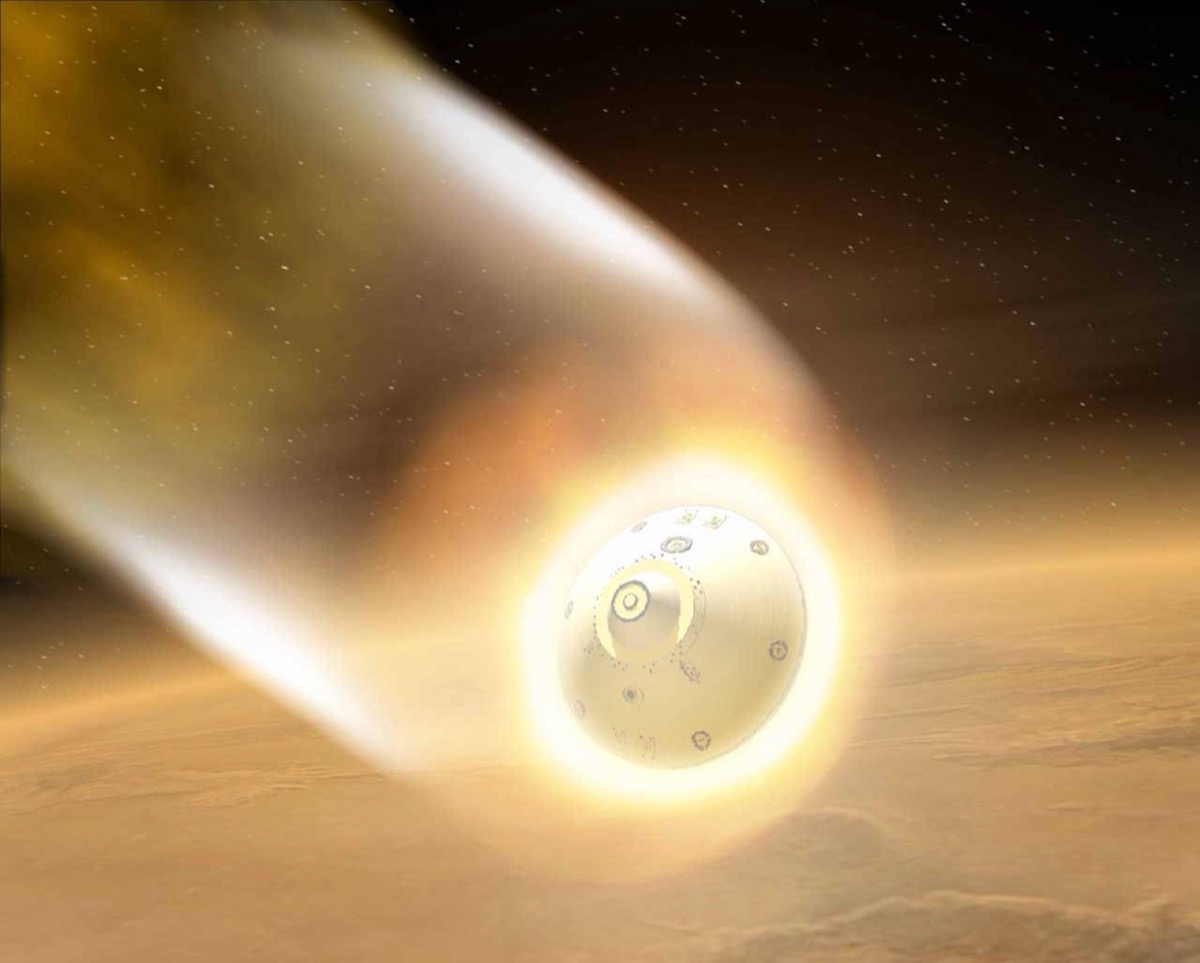
A spacecraft returning from orbit moves at 28,000 km/h and carries enormous kinetic energy. To land safely, it must shed that energy — and it does so by converting most of it to heat in the upper atmosphere. The science is brutal, the engineering is precise.
Why reentry generates so much heat
Air molecules cannot get out of the way fast enough. They pile up against the spacecraft's leading edge, compressing into a shock wave at hypersonic speeds. The compressed air heats to thousands of degrees and ionizes into plasma. The heat is from compression of air, not friction — a common misconception.
Three approaches to surviving
- Ablative heat shields — the shield material chars and erodes, carrying heat away with it. Used by Apollo, Orion, Crew Dragon, Soyuz.
- Reusable tile shields — ceramic tiles that radiate heat away while staying intact. Used by Space Shuttle and (in evolved form) Starship.
- Active cooling — fluid pumped through the shield to absorb heat. Used by Stoke Space's second stage (hydrogen-cooled metallic shield).
Reentry profiles
- ISS return reentry
- Peak temperature ~1,650 °C, peak g-force ~4 g
- Lunar return reentry (Orion)
- Peak temperature ~2,760 °C, ~7 g
- Mars-direct reentry (Apollo style)
- Peak temperature ~3,000+ °C
- Reentry duration
- ~5-15 minutes
- Plasma blackout
- Comms cut for ~3-5 minutes during peak
The plasma blackout
During peak heating, ionized air around the spacecraft blocks radio signals. Mission Control loses contact for several minutes — the plasma blackout. NASA developed satellite relays through TDRSS so modern crewed flights maintain communication, but blackout was historically a tense interval.
Why the angle matters
Too steep an angle means too much heat too fast — the shield fails. Too shallow, and the spacecraft skips off the atmosphere back into space. The correct entry corridor is narrow: for Apollo lunar return, just a few degrees wide.
Frequently asked questions
Why does a heat shield go on the bottom of the capsule?
Capsules enter heat shield first to maximize surface area facing the airflow, slowing the spacecraft via drag and protecting the rest of the structure.
Can spacecraft skip the atmosphere?
Yes — a too-shallow entry can cause skip-out, where the spacecraft bounces back into space. Mission planners avoid this carefully.
How does Starship's tile system work?
Starship uses thousands of ceramic tiles attached with a flexible underlayer. The system is designed for rapid replacement of damaged tiles between flights.
Get every launch in your pocket.
Real-time alerts, live ISS tracking, AR sky mode, and synchronized T-0 haptic across every device worldwide.
Download on the App Store