NASA's Mars Exploration Strategy: From Curiosity to Crewed Landing
How NASA's Mars program evolved from flybys to rovers to sample return — and what the path to a crewed mission looks like through the 2030s and 2040s.
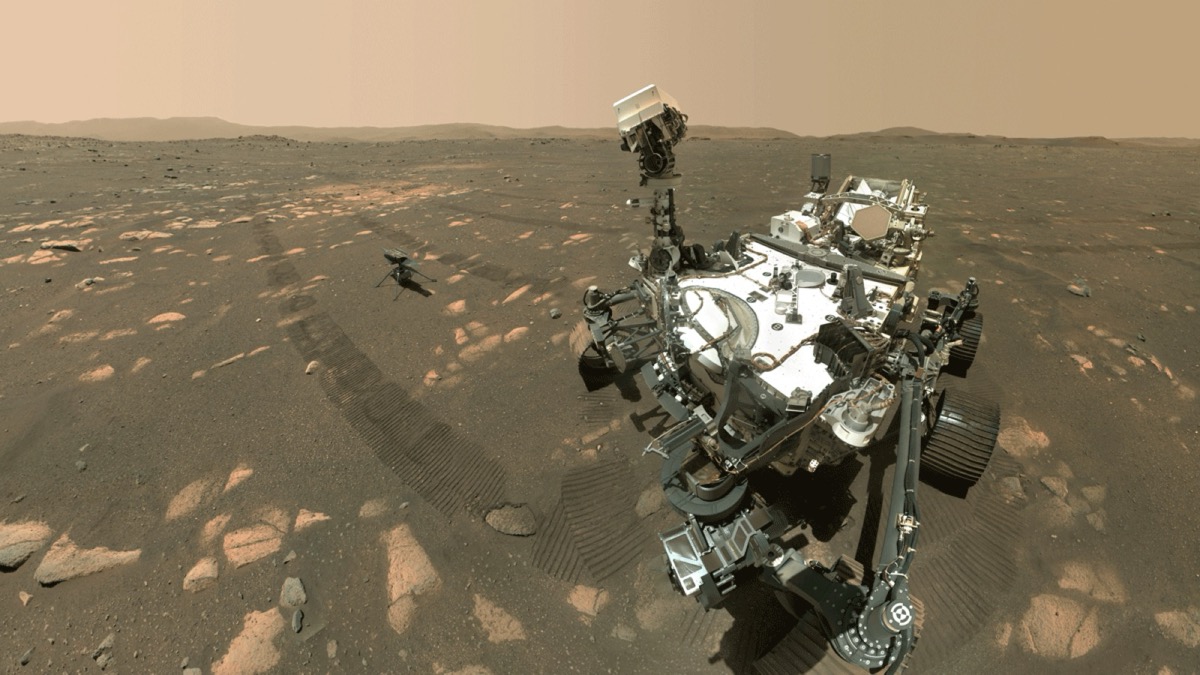
NASA has been continuously exploring Mars since Mariner 4 flew past in 1965. Today, three orbiters, two rovers, and a helicopter are operating there, with Sample Return on the way and a crewed mission in long-term planning. Here is the strategy from rover to red planet astronaut.
The rover lineage
- Sojourner (1997) — proof that wheeled robotics could explore Mars.
- Spirit and Opportunity (2004) — designed for 90 sols, operated for years (Opportunity, 14+ years).
- Curiosity (2012) — nuclear-powered, car-sized lab. Still active.
- Perseverance (2021) — Curiosity's successor with sample caching, plus the Ingenuity helicopter sidekick.
The science arc
Each rover answers a different question: Was there water? (Spirit/Opportunity). Was there habitability? (Curiosity). Was there life? (Perseverance, via samples to be returned). Future rovers and the eventual Sample Return campaign close the loop on the long-running search for past Martian life.
Mars Sample Return
The most ambitious robotic mission ever attempted: launch a rocket from Mars, rendezvous in Mars orbit, and bring sealed samples back to Earth. NASA and ESA are partners. The cost has grown significantly, leading to ongoing replans for affordability.
- Active surface assets
- Curiosity, Perseverance
- Active orbiters
- MAVEN, Mars Reconnaissance Orbiter, Mars Odyssey
- Total Mars budget annually
- ~$2-3 billion across all programs
- Crewed Mars mission
- No firm date — long-term goal, mid-2030s+
- Sample return target
- Early 2030s
Crewed Mars: the long arc
Artemis is the proving ground for the technology and operations needed to send humans to Mars: deep-space crew vehicles, surface habitats, life support, EVAs, and resource utilization. SpaceX's Starship is sized for Mars and is being designed accordingly. NASA's Mars architecture is in active formulation.
Frequently asked questions
When will humans land on Mars?
No firm NASA date is set. Mid-2030s and 2040s are commonly discussed. SpaceX has stated more ambitious timelines for uncrewed Starship cargo flights.
Are samples from Mars dangerous?
Planetary protection treats them with the highest containment standard out of caution, even though scientific consensus puts the risk of harmful biology very low.
Why send rovers if humans will go later?
Robotic missions are far cheaper, can scout sites, characterize hazards, and answer key science questions before humans risk going.
Get every launch in your pocket.
Real-time alerts, live ISS tracking, AR sky mode, and synchronized T-0 haptic across every device worldwide.
Download on the App Store