The Karman Line: Where Does Space Begin?
The Karman line is set at 100 km up — but the line is debated, the physics is gradual, and definitions matter for astronaut wings, FAA records, and tourism.
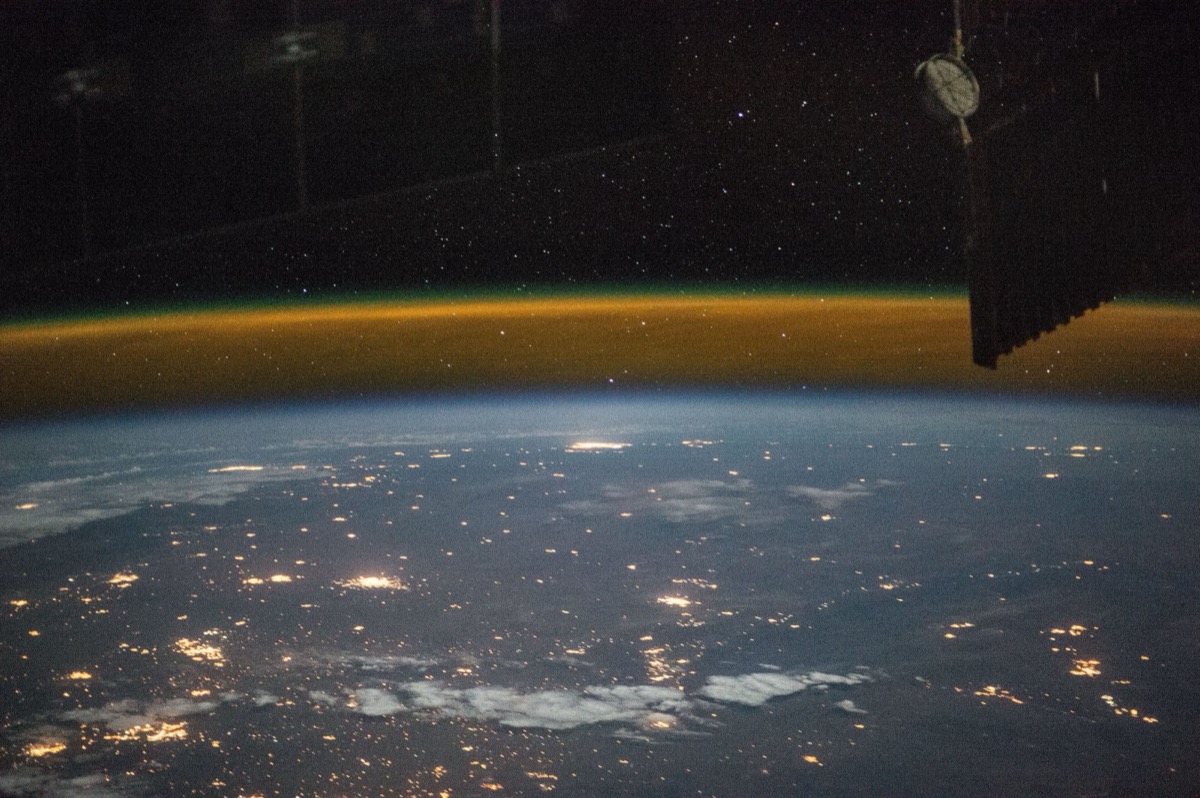
The Karman line is conventionally set at 100 km altitude as the boundary between Earth's atmosphere and space. It was named after Theodore von Kármán, who first calculated the altitude where atmospheric flight becomes impossible. The Fédération Aéronautique Internationale (FAI) uses it as the official boundary for spaceflight records.
Why 100 km?
Von Kármán's reasoning: the air gets so thin at high altitude that to generate enough lift to fly horizontally, an aircraft would need to travel at orbital velocity — at which point you are doing orbital mechanics, not aeronautics. He calculated this transition near 84 km; 100 km was rounded up as a clean boundary.
Two competing definitions
- FAI / Karman line: 100 km. International standard, used for FAI records.
- US Air Force / NASA: 50 miles (80.5 km). Used historically for astronaut wings; pilots crossing this altitude in X-15 received astronaut wings.
Why the difference matters
Blue Origin's New Shepard reaches above 100 km — its passengers are astronauts under both definitions. Virgin Galactic's VSS Unity peaks around 80-90 km — its passengers are astronauts under the US definition but not the FAI Karman line. The choice of definition has commercial marketing implications.
- Karman line
- 100 km (FAI)
- US definition
- 50 mi (80.5 km)
- Atmospheric pressure at 100 km
- ~0.0003 hPa (essentially vacuum)
- ISS altitude
- ~408 km
- Mesosphere boundary
- ~50-85 km
Why the atmosphere does not have a hard edge
Earth's atmosphere fades gradually. Aurora can occur at 100-500 km — clear evidence of atmosphere there, even though it is too thin for sound or aerodynamic flight. The exosphere extends out to 10,000 km. There is no precise altitude where space begins; the Karman line is a useful convention.
A 2018 Harvard reanalysis
Astrophysicist Jonathan McDowell published an analysis in 2018 arguing that 80 km is more physically meaningful than 100 km — closer to where the atmosphere stops affecting orbital lifetimes. The FAI considered the change but kept the 100 km convention for institutional continuity.
Frequently asked questions
Did Virgin Galactic passengers really go to space?
Under the US definition (50 mi / 80.5 km), yes. Under the international FAI definition (100 km Karman line), no. Both definitions have legitimate technical and historical bases.
Is the ISS in the atmosphere?
Technically, yes — at 408 km, the ISS still encounters trace atmosphere that causes drag and requires regular reboosts.
Where does the atmosphere actually end?
There is no hard edge. The geocorona, a faint hydrogen halo, extends to half the Earth-Moon distance.
Get every launch in your pocket.
Real-time alerts, live ISS tracking, AR sky mode, and synchronized T-0 haptic across every device worldwide.
Download on the App Store