CLPS: How NASA Hires Private Companies to Land on the Moon
The Commercial Lunar Payload Services program funds private lunar landers carrying NASA payloads. Inside the IM-1, IM-2, Blue Ghost, and Peregrine missions.
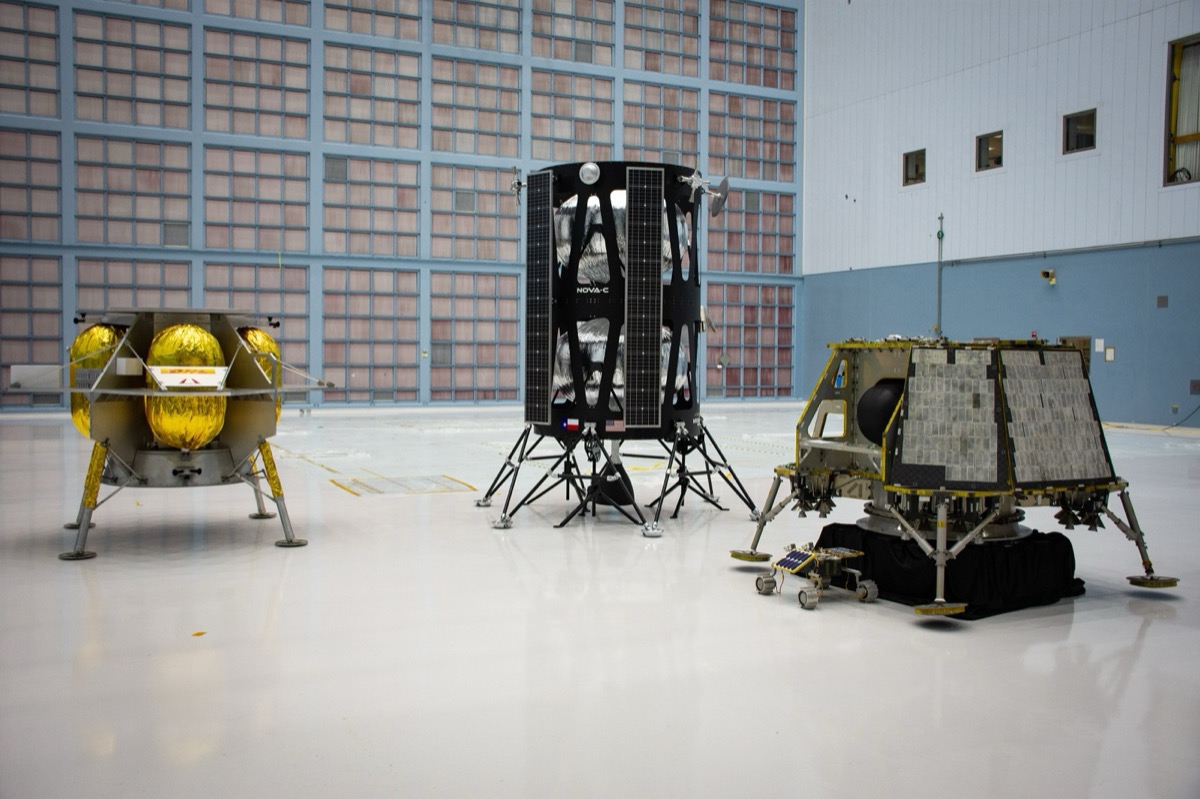
CLPS is NASA's answer to a simple question: how do you get small science payloads to the Moon affordably and frequently? Rather than building a new lander each time, NASA hires private companies to deliver instruments — paying flat rates per payload kilogram and accepting some mission risk in exchange for low cost and high cadence.
How the contracts work
- NASA selects providers via Indefinite Delivery, Indefinite Quantity (IDIQ) contracts.
- Specific missions are awarded as task orders, with the provider responsible for everything from spacecraft to landing.
- NASA pays for delivery and instrument operation; the provider may also fly commercial payloads alongside.
The early missions
- Astrobotic Peregrine (Jan 2024) — propellant leak after launch, did not reach the Moon.
- Intuitive Machines IM-1 Nova-C "Odysseus" (Feb 2024) — first US lunar landing since Apollo 17. Tipped on landing but operated.
- Firefly Blue Ghost (March 2025) — fully successful lunar landing with 10 NASA payloads.
- IM-2 (March 2025) — landed but tipped over, limited operations.
- IM-3, Astrobotic Griffin, more — additional missions on contract.
- Program started
- 2018
- Contracted providers
- Astrobotic, Intuitive Machines, Firefly, Draper, Lockheed Martin/General Atomics, ispace US, others
- Per-mission cost to NASA
- Typically $70-150 million
- First fully successful CLPS mission
- Firefly Blue Ghost, March 2025
- Risk tolerance
- Higher than NASA flagships — failures are expected
Why partial successes are still wins
A traditional NASA lander would be a $1B+ flagship with massive risk aversion. CLPS pays one-tenth as much per mission. If a mission lands sideways or only partially functions, NASA still gets data, the provider learns, and the next mission is right around the corner.
What CLPS enables
CLPS missions support Artemis directly — testing landing precision, dust mitigation, navigation, and resource prospecting. They also enable scientific payloads that would otherwise never fly because of cost. The program demonstrates that the Moon is becoming a regular destination, not a once-a-decade event.
Frequently asked questions
Is CLPS part of Artemis?
CLPS supports Artemis by demonstrating capabilities and delivering precursor science, but it is a separate program with its own contracts.
What science do CLPS missions carry?
A range — radiation monitoring, regolith analysis, navigation aids, dust mitigation experiments, retroreflectors, drilling, and student experiments.
Can private companies sell CLPS-style services without NASA?
Yes — providers can sell commercial payload space alongside NASA contracts, opening lunar delivery to commercial customers globally.
Get every launch in your pocket.
Real-time alerts, live ISS tracking, AR sky mode, and synchronized T-0 haptic across every device worldwide.
Download on the App Store