The James Webb Space Telescope: Five Years of Discoveries That Rewrote Astronomy
JWST has revealed galaxies older than thought possible, weighed alien atmospheres, and photographed planet-forming disks. A tour of its biggest finds — and what comes next.
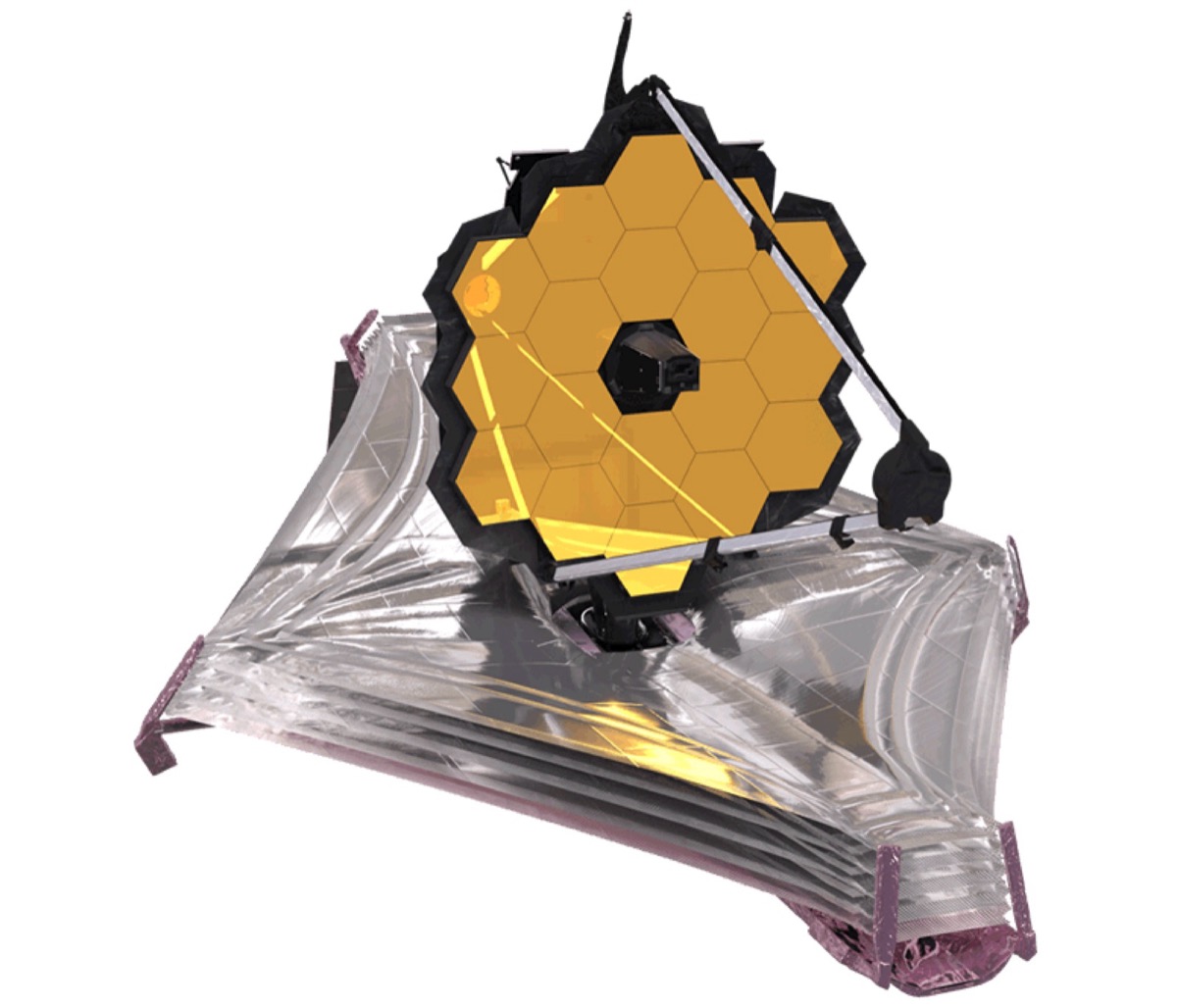
Since first light in mid-2022, the James Webb Space Telescope has done something rare in astronomy: it has surprised the experts. Galaxies appeared earlier and brighter than models predicted. Atmospheres were mapped on planets we did not know existed a decade ago. The deepest pinpricks of the sky filled with structure no human had ever seen.
Galaxies at the edge of time
JWST has discovered galaxies whose light left them when the universe was less than 300 million years old — and they are larger and more mature than theorists thought possible. The galaxy JADES-GS-z14-0 is the current record holder, observed at a redshift of 14.32, just 290 million years after the Big Bang.
Five discoveries that changed our picture
- Galaxies in the first 300 million years that already host massive stars and possibly black holes.
- CO₂ and methane detected in exoplanet atmospheres, including K2-18 b — a hint of a possible water-rich world.
- Direct imaging of exoplanets in the mid-infrared, including Saturn-mass companions to nearby stars.
- Detailed maps of carbon-rich dust in protoplanetary disks where planets are forming today.
- New views of solar system worlds — Neptune's rings sharper than Voyager 2 captured them, and methane fluorescence on Mars in real time.
- Primary mirror
- 6.5 m, gold-coated beryllium, 18 hexagonal segments
- Sunshield
- 5 layers of Kapton, 21 m × 14 m, blocks the Sun by 1 million times
- Operating temperature
- -233 °C (40 K)
- Location
- Sun-Earth L2 Lagrange point, 1.5 million km away
- Launch
- December 25, 2021 on Ariane 5
- Cost
- ~$10 billion
How JWST is different from Hubble
Hubble works mostly in visible light from low Earth orbit. JWST works in infrared from a much colder, more distant location — the L2 Lagrange point. Infrared lets it see through dust, observe cooler objects, and look at galaxies whose light has been redshifted by cosmic expansion. Webb sees what Hubble cannot.
How long will JWST last?
The mission was designed for 5 years and budgeted for 10. Thanks to a precise Ariane 5 launch that used very little of Webb's onboard fuel, NASA estimates the spacecraft can operate for at least 20 years before propellant for station-keeping runs out.
Frequently asked questions
Can JWST see planets in other star systems?
Yes — both directly (in some cases) and via transit spectroscopy that reveals the chemistry of their atmospheres.
Why did JWST take so long to build?
Each component required new technology — segmented mirrors, sunshield deployment, cryogenic instruments. Schedule slips reflected the difficulty of inventing as you go.
Has JWST replaced Hubble?
No. Hubble continues to operate and the two telescopes complement each other — Hubble in visible/UV, Webb in infrared. Many science programs use both.
Get every launch in your pocket.
Real-time alerts, live ISS tracking, AR sky mode, and synchronized T-0 haptic across every device worldwide.
Download on the App Store