Inspiration4: The First All-Civilian Orbital Mission and Why It Mattered
In September 2021, four civilians spent three days in orbit on Crew Dragon — no government astronauts on board. The mission that proved private orbital spaceflight had arrived.
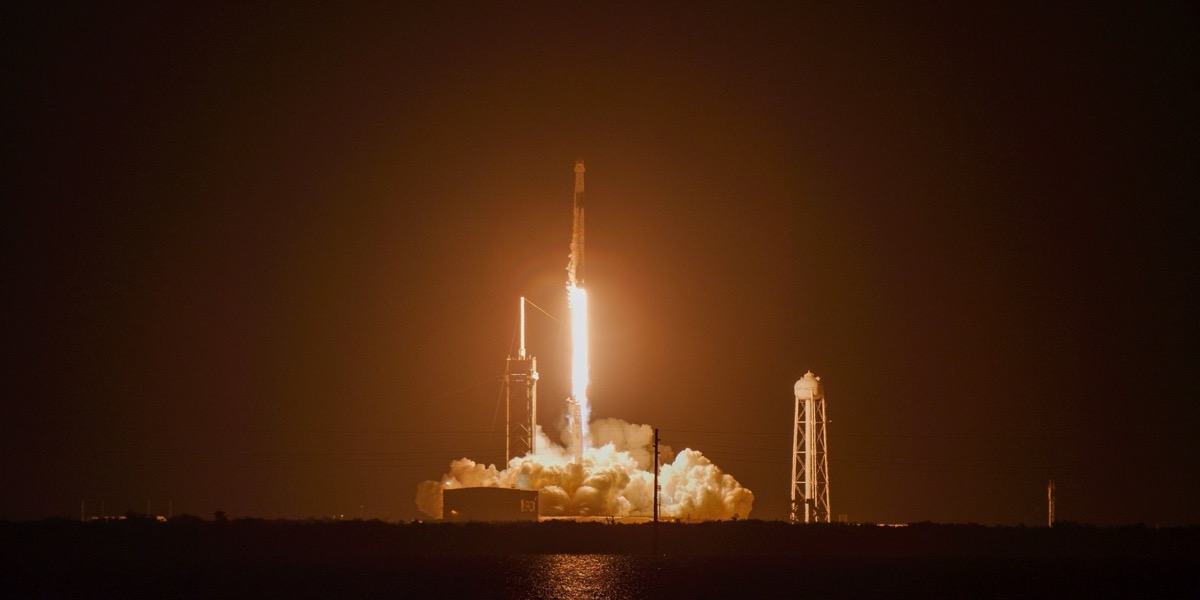
Before Inspiration4, every orbital crewed mission included at least one professional astronaut. Inspiration4 changed that. Four civilians — three of whom had never flown in space and none of whom worked for a government agency — orbited Earth for three days, raising more than $250 million for St. Jude Children's Research Hospital along the way.
The crew of four civilians
- Jared Isaacman (Commander) — entrepreneur and pilot who funded the mission and named the four seats after Leadership, Hope, Generosity, and Prosperity.
- Hayley Arceneaux (Hope) — physician assistant at St. Jude and a former pediatric cancer patient there. The youngest American to orbit Earth at age 29 and the first person with a prosthetic body part to fly.
- Sian Proctor (Prosperity) — geoscientist and educator. The first Black woman to pilot a spacecraft.
- Christopher Sembroski (Generosity) — Lockheed Martin data engineer who won his seat through a charity raffle.
Mission profile
- Launch
- September 15, 2021, from LC-39A at Kennedy Space Center
- Spacecraft
- Crew Dragon Resilience
- Orbit
- 585 km — higher than the ISS at 408 km
- Duration
- 3 days
- Splashdown
- September 18, 2021, off Florida
- Funds raised for St. Jude
- ~$250 million
What was different from a tourist flight
The crew trained for six months — centrifuge runs, parabolic flights, mountain climbing for fitness, and full Crew Dragon simulator hours. Sembroski took on the engineering officer role, Arceneaux led medical operations, Proctor handled communications and education outreach. This was a working flight, not a sightseeing trip.
Why a higher orbit?
The 585 km orbit gave the crew a different vantage than ISS visitors get. They observed the curvature of Earth more pronounced, ran a cupola observation experiment through Dragon's newly added glass dome, and tested human factors in a longer-radiation environment.
What it changed
Inspiration4 proved that crewed orbital flight no longer required a government program. It opened the path for Polaris Dawn, Axiom's ISS missions, and a still-developing private astronaut economy. Within five years of the mission, more civilians had reached orbit than in the previous five decades combined.
Frequently asked questions
How much did Inspiration4 cost?
Isaacman has not disclosed the exact figure but it is widely reported to have been roughly $200 million for the full mission and crew training.
Did Inspiration4 dock with the ISS?
No. Crew Dragon Resilience flew a free-flying mission and did not approach the ISS. The cupola configuration replaced the docking adapter for this flight.
Was Inspiration4 a charity event?
Yes and no — it was a private spaceflight that explicitly raised funds for St. Jude, with Isaacman pledging $100 million personally. Total raised exceeded $250 million.
Get every launch in your pocket.
Real-time alerts, live ISS tracking, AR sky mode, and synchronized T-0 haptic across every device worldwide.
Download on the App Store