A Virtual Tour of the International Space Station: Module by Module
The ISS is the size of a football field with the interior volume of a 6-bedroom house. A walkthrough of every module — what they do and who built them.
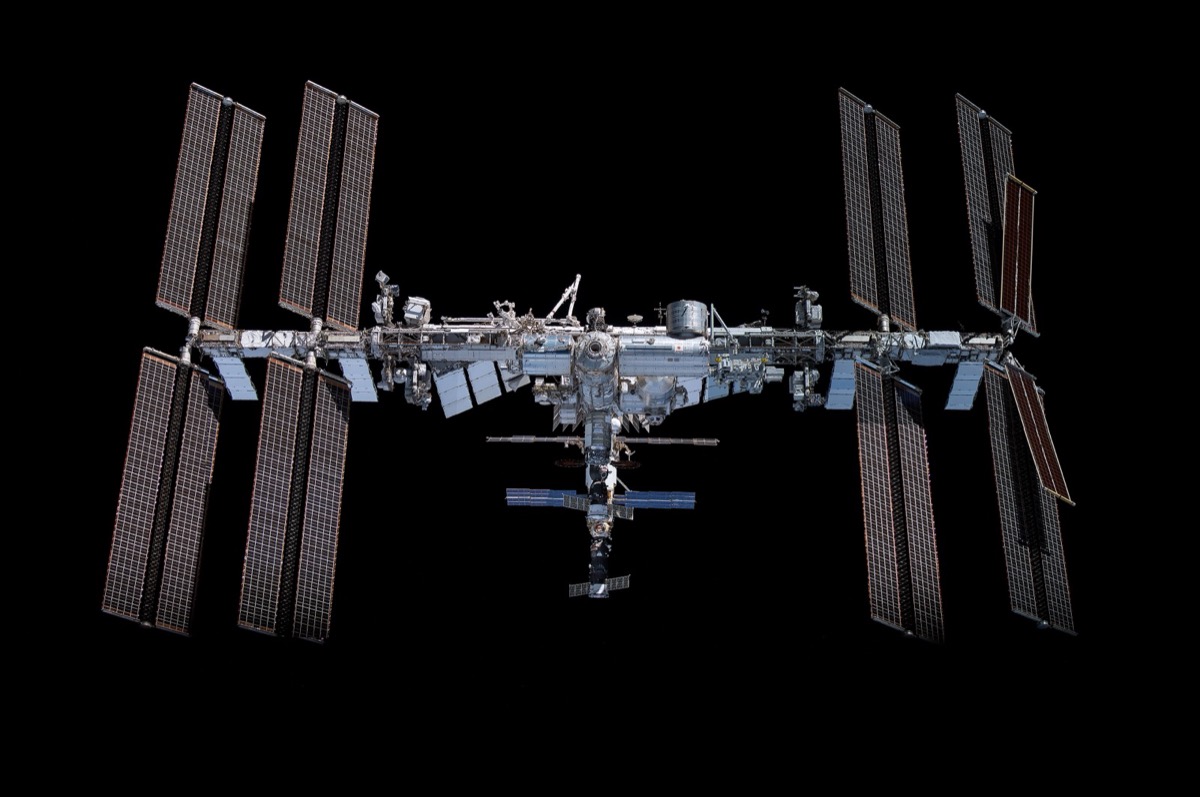
The International Space Station is the largest structure ever built off Earth. It spans 109 m end-to-end, weighs over 420 metric tons, and pressurized volume rivals a six-bedroom house. It was assembled in orbit, one module at a time, between 1998 and 2011 — and is still maintained today by a continuous human presence.
The major modules
- Zarya (Russia, 1998) — the first module ever launched, originally provided power and propulsion.
- Unity / Node 1 (US, 1998) — first US module, connecting Russian and US segments.
- Zvezda (Russia, 2000) — initial crew living quarters with life support and propulsion.
- Destiny (US, 2001) — primary US laboratory for science.
- Quest (US, 2001) — main US airlock for spacewalks.
- Pirs/Poisk (Russia) — Russian docking and airlock modules.
- Harmony / Node 2 (US, 2007) — connects US, European, and Japanese segments.
- Columbus (ESA, 2008) — European laboratory for life and physical science.
- Kibo (Japan, 2008-2009) — largest single module, Japanese laboratory plus an external porch.
- Tranquility / Node 3 (US, 2010) — life support and exercise equipment, attached to the Cupola.
- Cupola (US/ESA, 2010) — seven-window observation dome with the best view in the solar system.
- BEAM (Bigelow, 2016) — first inflatable habitat module, still attached as a storage area.
- Nauka (Russia, 2021) — multipurpose Russian laboratory module.
The Cupola: a window like no other
The Cupola is a small dome with seven windows — one round window 80 cm across in the center plus six trapezoidal side windows. Astronauts use it for Earth observation, robotic arm operation, and the iconic photographs you have seen from space. It is widely considered the most beloved spot on the station.
- Length end-to-end
- 109 m (1 m shy of a football field)
- Mass
- ~420 metric tons
- Pressurized volume
- 388 m³
- Solar array span
- 73 m
- Crew capacity
- 7
- Orbital period
- ~93 minutes
- Sunrises per day
- 16
Daily life inside
A typical day starts with breakfast in the galley near the wardroom in Unity. Astronauts spend 6.5 hours on science across Destiny, Columbus, and Kibo. They exercise 2.5 hours daily on the treadmill, ARED resistance machine, and bicycle to fight muscle and bone loss. Sleep is in private "phone booths" in Harmony, attached to the wall.
Frequently asked questions
How big is the ISS inside?
About 388 cubic meters of pressurized volume — comparable to a six-bedroom house, but distributed across many connected modules.
Which module has windows?
Every module has small windows but the Cupola has seven, including the largest window ever flown in space, providing 360° viewing.
Do all the modules still work?
Yes. Modules are routinely maintained. Older modules have had components replaced over time, and external surfaces are inspected for micrometeorite damage.
Get every launch in your pocket.
Real-time alerts, live ISS tracking, AR sky mode, and synchronized T-0 haptic across every device worldwide.
Download on the App Store