How to Spot the International Space Station in the Night Sky
The ISS is the brightest moving object in the sky. Here is exactly how to find it, when to look, and how to know what you are seeing.
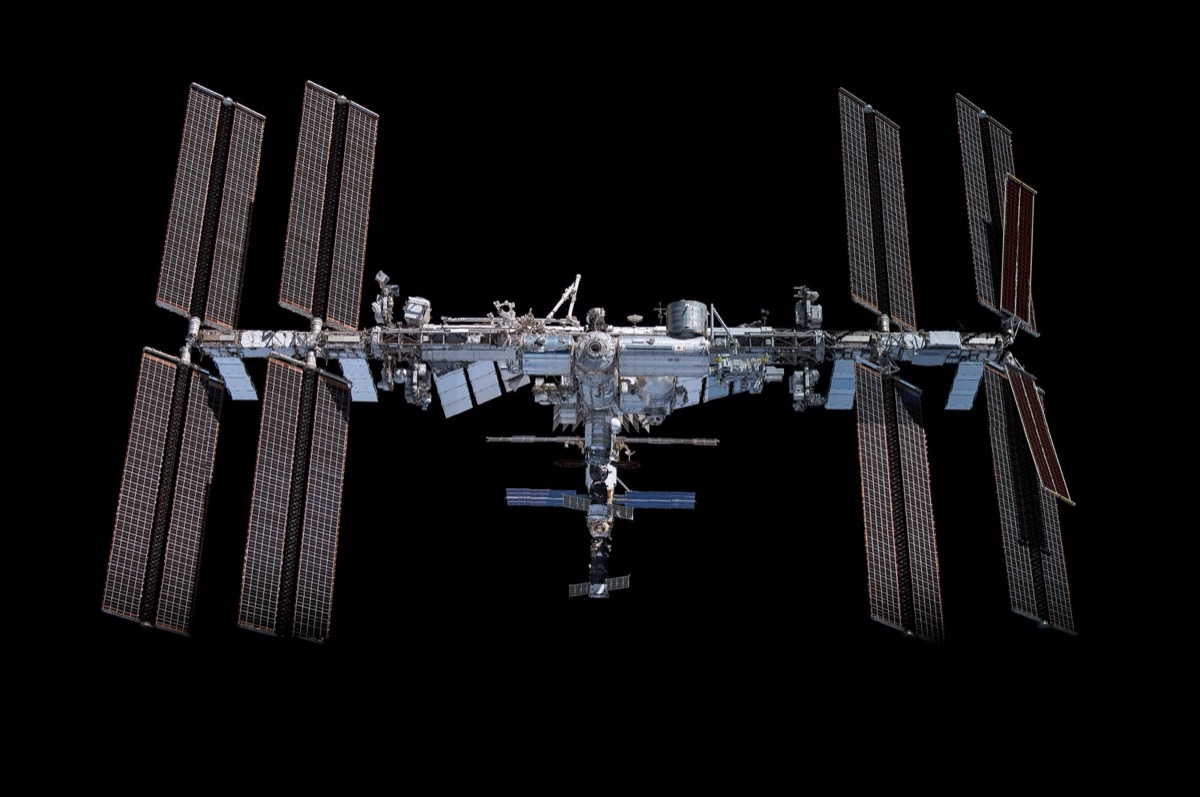
The International Space Station is the brightest human-made object in the night sky — brighter than every star, brighter than Venus at its maximum. With no telescope and no special skill, you can watch it cross overhead from horizon to horizon in roughly five minutes. Once you know how, you will see it whenever it passes.
When the ISS is visible
The ISS only reflects sunlight. Visible passes happen during your local twilight — roughly an hour after sunset or before sunrise — when the sky is dark but the station is still in sunlight 408 km up. During the middle of the night, the station passes through Earth's shadow and is invisible.
Step-by-step on a clear evening
- Open Launchcast or another ISS tracker. Set your location and check tonight's pass list.
- Look for a pass with a maximum elevation above 30°. Higher passes are brighter and easier.
- Note the start time, start direction, and end direction. Passes always go from west toward east.
- Be outside 2 minutes before the listed start time. Look at the start direction (usually west, west-southwest, or northwest).
- Watch for a steady, unblinking white-yellow point of light that moves smoothly across the sky.
- Track it from horizon to horizon — about 4-6 minutes total.
- ISS altitude
- ~408 km
- ISS speed
- 27,600 km/h (7.66 km/s)
- Brightness at peak
- Magnitude -3 to -4 (brighter than Venus)
- Pass duration
- Up to ~6 minutes
- Color
- Steady white or slightly yellow — does not blink
- Direction
- West to east (orbit inclination 51.6°)
How to be sure it is the ISS, not an airplane
- No blinking. Aircraft have flashing strobes; the ISS is a steady glow.
- No sound. The ISS is too high to hear.
- Steady straight path. Aircraft can curve; the ISS moves in a smooth arc.
- Disappears mid-sky. The ISS often fades out as it enters Earth's shadow — a unique signature.
Best months to watch
In summer at mid-latitudes, evening passes are rare because the sky stays bright after sunset. Winter and the equinoxes offer the best mix of dark sky and frequent passes. The ISS' orbit shifts by about 4° per day relative to your local time, so multi-day pass series come in clusters.
Frequently asked questions
Do I need a telescope?
No. The ISS is plenty bright for the naked eye. A telescope or binoculars can resolve some structure but is not required.
How often does the ISS pass over my location?
Typically a few visible passes per week, though this varies with season and latitude. Some weeks have many; others have none.
Can I take a photo of the ISS?
Yes — long-exposure photography (8-30 seconds) captures the trail. Tripod and a wide-angle lens recommended.
Get every launch in your pocket.
Real-time alerts, live ISS tracking, AR sky mode, and synchronized T-0 haptic across every device worldwide.
Download on the App Store