Artemis II: Humanity's First Crewed Trip Beyond the Moon Since 1972
Inside Artemis II — the 10-day crewed lunar flyby that sets the stage for boots back on the Moon. Crew, trajectory, hardware, and exactly when to watch.
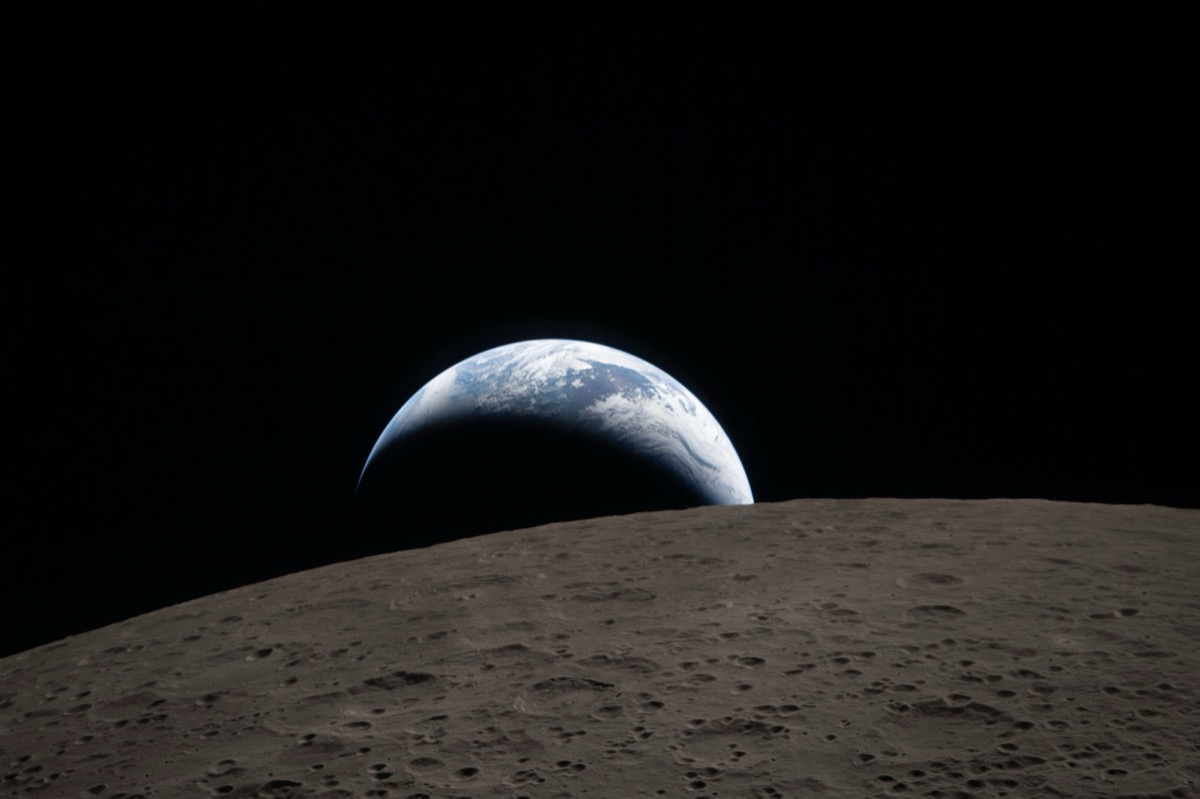
Artemis II will fly four astronauts around the far side of the Moon and home — the first crewed mission to leave low Earth orbit in more than half a century. It is the proving flight before NASA puts boots back on the lunar surface with Artemis III.
The crew
- Reid Wiseman (Commander) — U.S. Navy aviator and former ISS Expedition 41 flight engineer.
- Victor Glover (Pilot) — first Black astronaut to fly a long-duration ISS mission, on Crew-1.
- Christina Koch (Mission Specialist) — holds the record for the longest single spaceflight by a woman (328 days).
- Jeremy Hansen (Mission Specialist) — Royal Canadian Air Force fighter pilot, first Canadian to fly to the Moon.
Mission profile in plain English
After liftoff from Kennedy Space Center on Space Launch System Block 1, Orion will spend roughly 24 hours checking out systems in a high Earth orbit. The crew then performs a Trans-Lunar Injection burn, coasts for four days, swings around the Moon at a closest approach of about 9,200 km from the far side, and uses lunar gravity to slingshot home. Total mission duration: about 10 days.
- Launch vehicle
- SLS Block 1 (98 m tall, 8.8 million lb thrust)
- Spacecraft
- Orion + European Service Module
- Crew size
- 4
- Duration
- About 10 days
- Max distance from Earth
- ~370,000 km — the farthest humans have flown
- Reentry speed
- ~40,000 km/h (Mach 32)
- Splashdown
- Pacific Ocean off San Diego
Why the free-return trajectory matters
Artemis II uses a free-return trajectory, the same kind of orbital geometry that brought Apollo 13 home alive. If Orion's main engine fails after Trans-Lunar Injection, the Moon's gravity alone is enough to bend the spacecraft's path back toward Earth — no propulsion required. It is the safest way to test a brand-new crew vehicle this far from home.
What gets tested for the first time
- Orion life support with humans on board (regenerative CO₂ scrubbers, water recovery, thermal control).
- Deep-space communications via NASA's Near Space Network and Deep Space Network.
- Manual piloting near the Moon — the crew will fly Orion in proximity to the spent upper stage as a rendezvous rehearsal.
- High-speed reentry and the Avcoat 5034 ablative heat shield at lunar return velocities.
How to watch and track the mission
- NASA TV will stream every major milestone live — launch, TLI, lunar flyby, and splashdown.
- Launchcast pushes T-0 alerts and live telemetry; you can feel the haptic countdown synchronized to ignition.
- During the lunar flyby, look up on the night the spacecraft passes the far side — Orion is visible to large amateur telescopes near the Moon.
Frequently asked questions
Will Artemis II land on the Moon?
No. Artemis II is a flyby — the crew will not land. Artemis III, scheduled for the following year, will be the first crewed lunar landing since Apollo 17 in 1972.
How much does Artemis II cost?
NASA estimates the per-mission cost of an SLS/Orion flight at roughly $4.1 billion, according to the agency's inspector general.
How fast will Orion return to Earth?
Around 40,000 km/h — about Mach 32. The heat shield reaches roughly 2,760 °C during reentry.
Can I see Artemis II in the night sky?
During the trans-lunar coast, the spacecraft is too small and far to see with the naked eye, but the Moon itself will be your best reference. Apps like Launchcast show real-time position relative to the Moon.
Get every launch in your pocket.
Real-time alerts, live ISS tracking, AR sky mode, and synchronized T-0 haptic across every device worldwide.
Download on the App Store