New Glenn First Flight: A Complete Breakdown of Blue Origin's Historic Launch
A breakdown of New Glenn's historic first flight — the seven BE-4 engines, the booster recovery attempt, what worked, and what New Glenn means for the medium-heavy launch market.
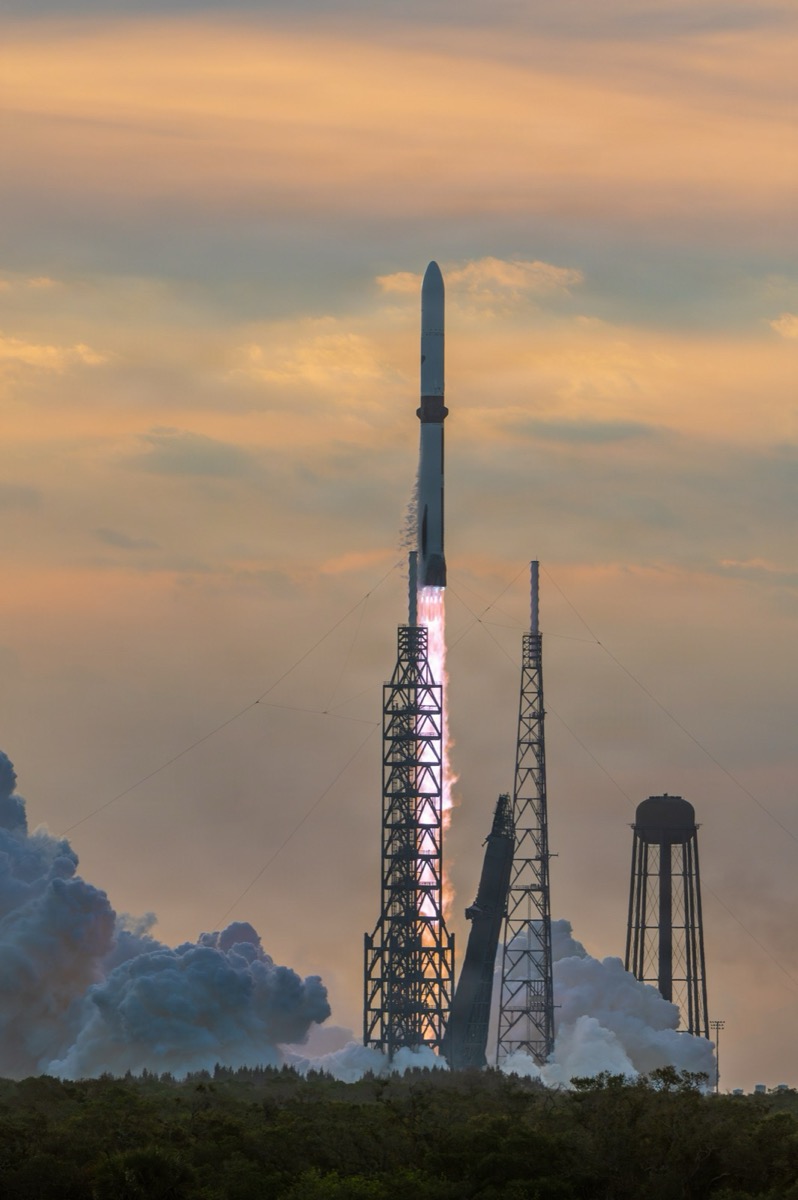
After more than a decade of development, Blue Origin's New Glenn rocket finally launched. The first flight cleared the pad, hit major mission objectives, and made New Glenn the second operational US heavy-lift rocket alongside Falcon Heavy. Here is the complete breakdown of what happened, what worked, and what comes next.
New Glenn at a glance
- Height
- 98 m (322 ft)
- Diameter
- 7 m
- First-stage engines
- 7 × BE-4 (methane + LOX)
- Liftoff thrust
- 17.1 MN (3.85 million lbf)
- Second stage
- 2 × BE-3U (hydrogen + LOX)
- Payload to LEO
- 45,000 kg
- Payload to GTO
- 13,000 kg
- Reusability
- First stage — drone ship landing
What happened on flight one
New Glenn lifted off cleanly from LC-36 in Florida. The seven BE-4 engines on the first stage performed nominally through MECO. Stage separation was clean, and the second stage carried its demonstration payload to the planned orbit. The first-stage booster attempted a drone-ship landing — the first stage did not survive landing on attempt one, but it returned valuable data.
Why BE-4 matters
The BE-4 is the same engine that powers the first stage of ULA's Vulcan Centaur. By having a single methane engine line that supplies two heavy-lift programs, Blue Origin spreads engine costs across more flights and mission profiles — a key economic advantage.
New Glenn versus Falcon Heavy
- New Glenn LEO
- 45,000 kg (reusable target)
- Falcon Heavy LEO
- 63,800 kg (expendable) / ~57 t recoverable
- New Glenn fairing
- 7 m diameter — wider than F9/FH
- Reusability
- Both have reusable first stages; FH currently flying
Blue Moon and the Artemis connection
New Glenn is the launch vehicle for Blue Origin's Blue Moon Mark 1 cargo lander and the Mark 2 crewed lander selected for Artemis V. Operational New Glenn cadence directly enables a second sustainable lunar landing capability for NASA.
What's next for New Glenn
- Booster recovery — successful drone-ship landing on a near-term flight
- Project Kuiper deployments at scale
- Blue Moon cargo lander missions
- NSSL national security launches under USSF contracts
Frequently asked questions
How big is New Glenn compared to Falcon 9?
New Glenn is significantly larger — 98 meters tall vs Falcon 9's 70 meters, with seven first-stage engines vs nine smaller ones, and a wider 7-meter fairing.
Did New Glenn land on its first flight?
New Glenn's first stage attempted a drone-ship landing on flight one. Like Falcon 9's early attempts, the booster did not survive the first landing attempt, but the data collected feeds future success.
What engine does New Glenn use?
New Glenn's first stage uses seven BE-4 methane/LOX engines. The same engine powers ULA's Vulcan Centaur first stage.
Get every launch in your pocket.
Real-time alerts, live ISS tracking, AR sky mode, and synchronized T-0 haptic across every device worldwide.
Download on the App Store