Sierra Space: Dream Chaser, Orbital Reef, and a Lifting-Body Comeback
Sierra Space's Dream Chaser will be the first lifting-body spacecraft to fly to the ISS in decades. Plus Orbital Reef, the inflatable LIFE habitat, and a private spaceflight push.
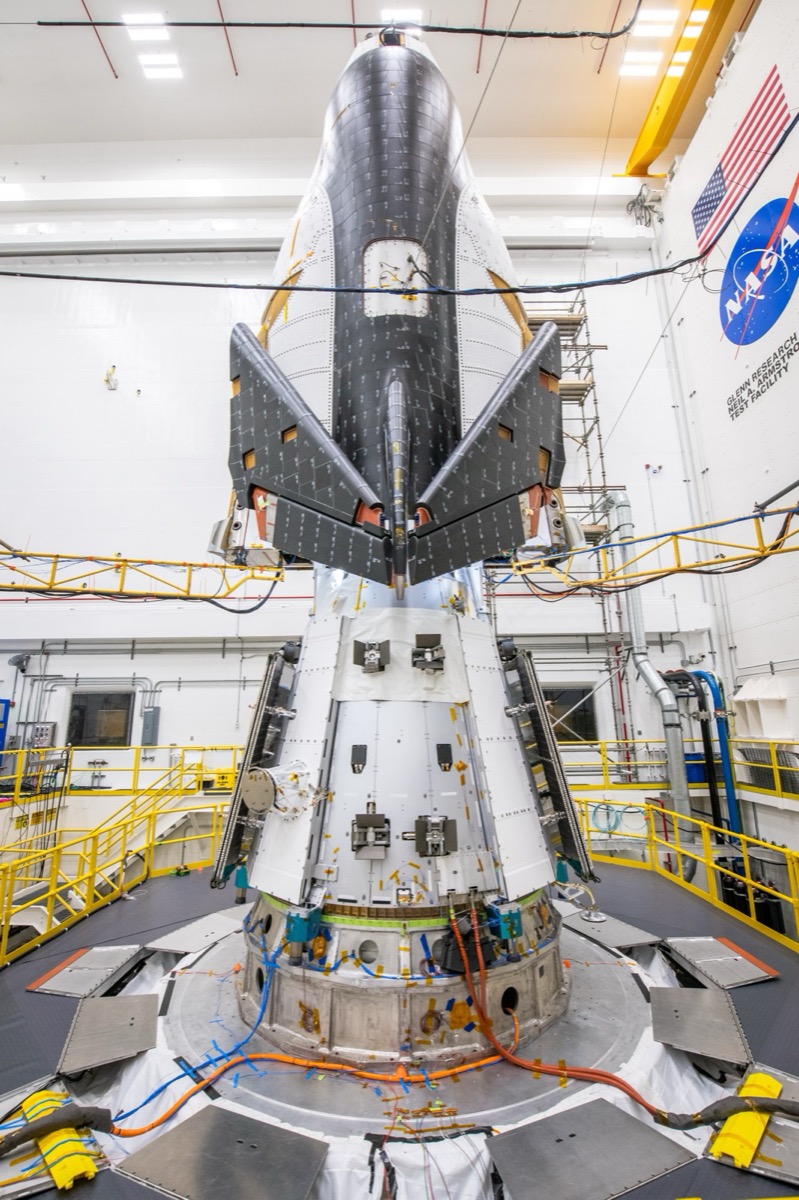
Dream Chaser is a winged spacecraft about a quarter the size of the Space Shuttle. It launches inside a fairing, glides back to a runway landing, and can be reused dozens of times. After years of delays, it is now flight-hardware-ready — preparing to return ISS cargo missions to runway landings for the first time since the Shuttle.
Why a lifting body?
- Runway landings let payloads return at low g-loads (about 1.5g vs ~5g for capsules).
- Cargo can be unloaded immediately at the runway rather than after recovery at sea.
- The reusable design supports many flights with limited refurbishment.
- Lifting bodies provide cross-range maneuverability for landing site flexibility.
Tenacity and Reverence
Sierra Space named its first two Dream Chaser vehicles Tenacity and Reverence. Tenacity completed environmental testing at NASA's Neil Armstrong Test Facility and is awaiting first flight. Reverence is in production. Each spacecraft is designed for at least 15 missions.
- Spinoff
- 2021 from Sierra Nevada Corporation
- HQ
- Louisville, Colorado
- Dream Chaser length
- 9 m (about 30 ft)
- Cargo capacity
- Up to 5,500 kg pressurized + 460 kg unpressurized
- Launch vehicle
- ULA Vulcan Centaur
- Landing
- Runway, including Kennedy Space Center Shuttle Landing Facility
Orbital Reef and LIFE
Sierra Space's LIFE habitat is an inflatable structure roughly the volume of a three-bedroom house, fitting compressed inside a standard rocket fairing. It is the proposed primary module for Orbital Reef, the commercial space station Sierra Space is co-developing with Blue Origin under NASA's Commercial LEO Destinations program.
Inflatable habitats are not new
TransHab in the 1990s pioneered the technology. Bigelow Aerospace launched two demos in the 2000s and the BEAM module on the ISS. Sierra Space's LIFE is the next-generation iteration — designed for full crew habitation rather than experimental demos.
Frequently asked questions
When will Dream Chaser fly?
NASA and Sierra Space are working through final integration and ground testing. The first ISS cargo mission is targeted within months of the next launch window opening.
Is there a crewed Dream Chaser?
A crewed variant has been studied and proposed. Current ISS cargo missions use the cargo variant; a crewed version would be a separate certification program.
How big is Orbital Reef?
Plans call for a habitable volume comparable to ISS's US segment — and an explicitly commercial business model targeting tourism, research, and manufacturing.
Get every launch in your pocket.
Real-time alerts, live ISS tracking, AR sky mode, and synchronized T-0 haptic across every device worldwide.
Download on the App Store